EPISODE 161
POLYTONALITY PT. 2

HOST- Jeremy Burns, Matthew Scott Phillips

GENRE- Theory

DURATION- 80:48

BUMPER MUSIC- "It's NOT a Mistake!" (Area 47)

ANNOUNCER- Mike Cunliffe

LISTEN

\

DESCRIPTION

We now continue our discussion on polytonality, superpositions, pitch collections, pitch classes and T class transpositions...whew! We will expand on the framework of polytonality with some more concepts, published by our own Dr.Phillips, such as controlling pitch class collections and sub center collections. We will hear some examples and we may find ourselves in more keys than one! Join us!

KEYWORDS

POLYTONALITY- If a piece, or passage, of music is considered "polytonal" it can have more than one percieved tonal center (key).

ATONALITY- If a piece, or passage, of music is considered "atonal" it has no percieved tonal center (key).

POLYCHORDAL- When two or more chords are present at the same time.

PITCH CLASS- Each note on the scale (begining with C) is assigned a number. C=0, C#=1, D=2, etc. The pitch class is immovable (C will always be 0) and also includes all octaves of said class (C1, C2, C3, etc. will always be pitch class 0).

PITCH COLLECTION- This a collection of pitch classes. Scales and modes could be considered pitch collections.

SUPERPOSITION- A superposition is a combination of 2 chords, based on the distance between their roots and uneffected by chord quality or inversion. There are 11 possible superpositions that can come from the chromatic scale.

T CLASS OPERATION- The act of transposing a collection of notes (pitch collection). Where C = 0, a T1 operation would transpose it up to C#. A T2 operation would transpose it up to D, T3 to D# and so on.

CONTROLLING COLLECTION- When a piece of music is perceived as being in more than one key, the controlling collection of pitches is the more dominant collection, from which the other collections "blossom". This key is said to have more "weight" to it than the others.

SUBCENTER COLLECTION- When a piece of music is perceived as being in more than one key, the subcenter collection(s) of pitches is said to be less "weighted" than the contolling pitch collection. It is still independent from the controlling collection but is often derived from said collection.

VARIANT-When two or more keys are present we use the word variant to describe the pitches that these keys do NOT have in common.

INVARIANT- When two or more keys are present we use the word invariant to describe the pitches that these keys have in common.

KAROL SZYMANOWSKI
"MAZURKA OP. 50 No.1"


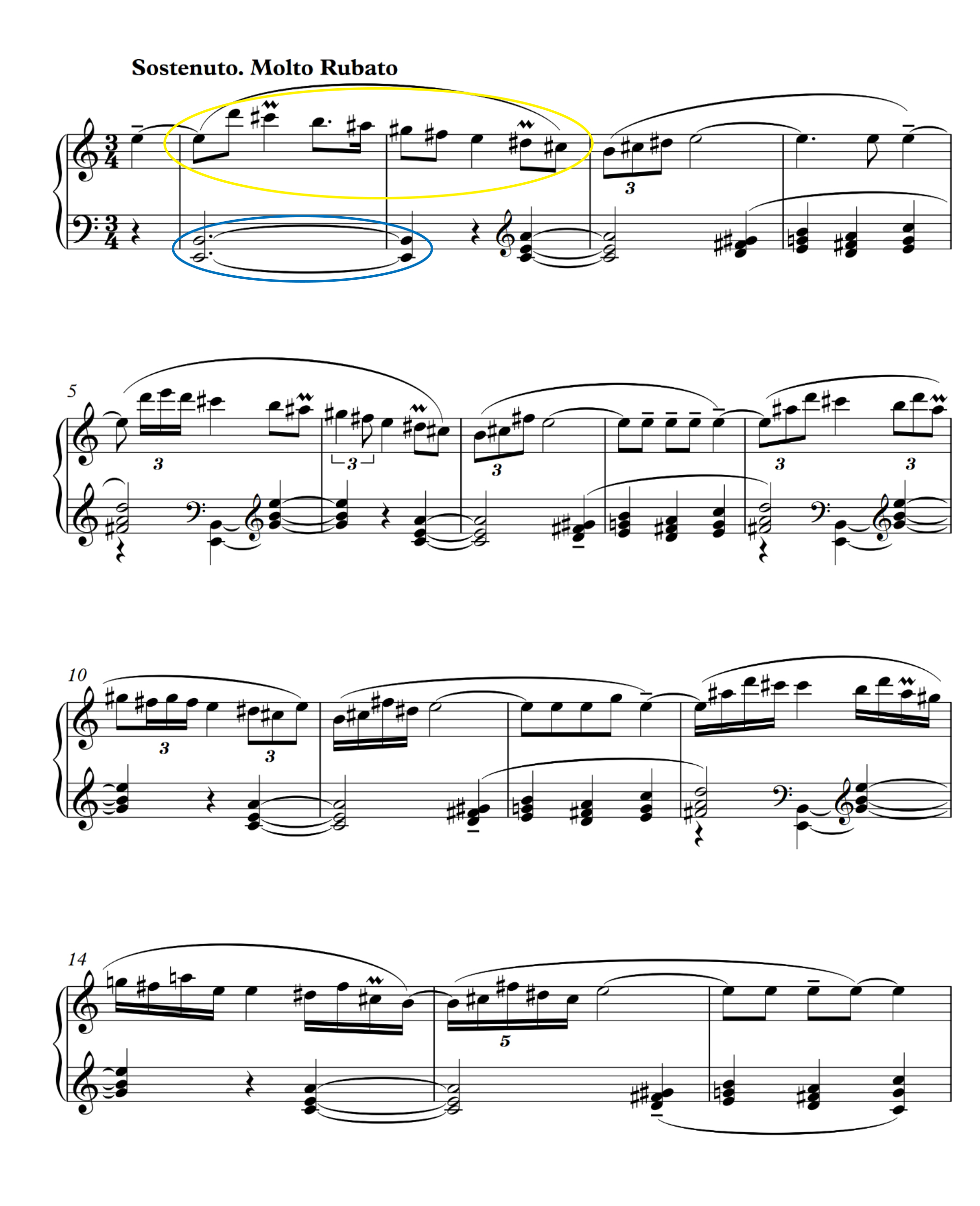
Szymanowski is a Polish composer who published 20 mazurkas between 1924 and 1925. This is first of that series. Where the examples from Polytonality Pt. 1 featured 2 different keys. This one features 2 different modes. In the left hand, or bass clef, you will see a prevailing open 5th E chord (E and B), which moves to iv (Am) in beat 3 of measure 2, and pretty well establishes it's self to be in E minor. This would be considered the CONTROLLING COLLECTION. However, in the right hand, or treble clef, notice all the chromaticism? This is because the higher register is in the E Podalian mode, a Polish mode that is the major key with a shapened 4 and a flatted 7th. Notice the key signature is that of C major / A minor. However, all the F's in the bottom staff are sharpened. The prolonged E note seems to carry through in both registers.


Here is a video of Mazurka Op. 50 No.1, performed by Peter Jablonski live at Wigmore Halle, Sept.21, 2024
MATTHEW SCOTT PHILLIPS
"SHADOW AND SELF"


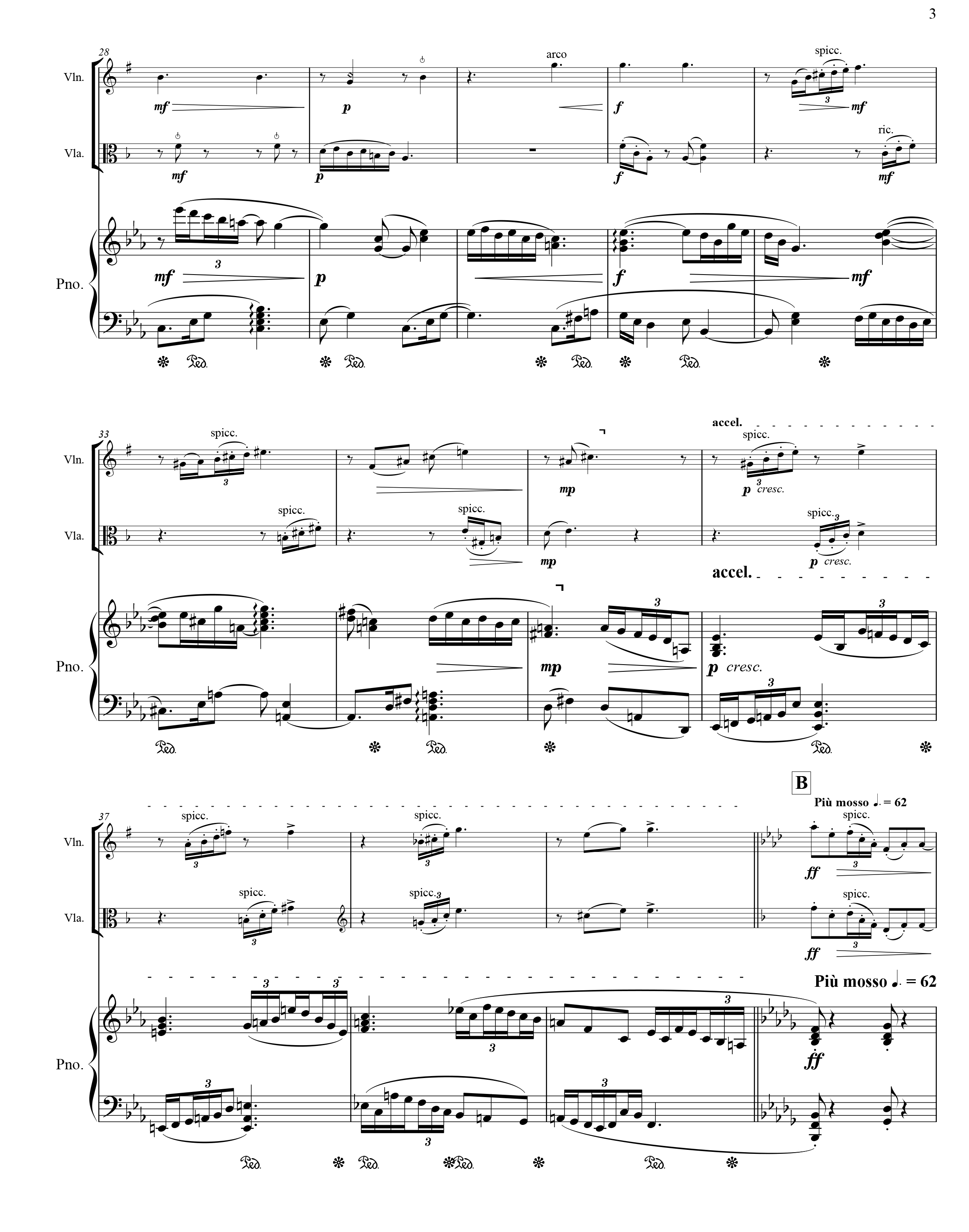
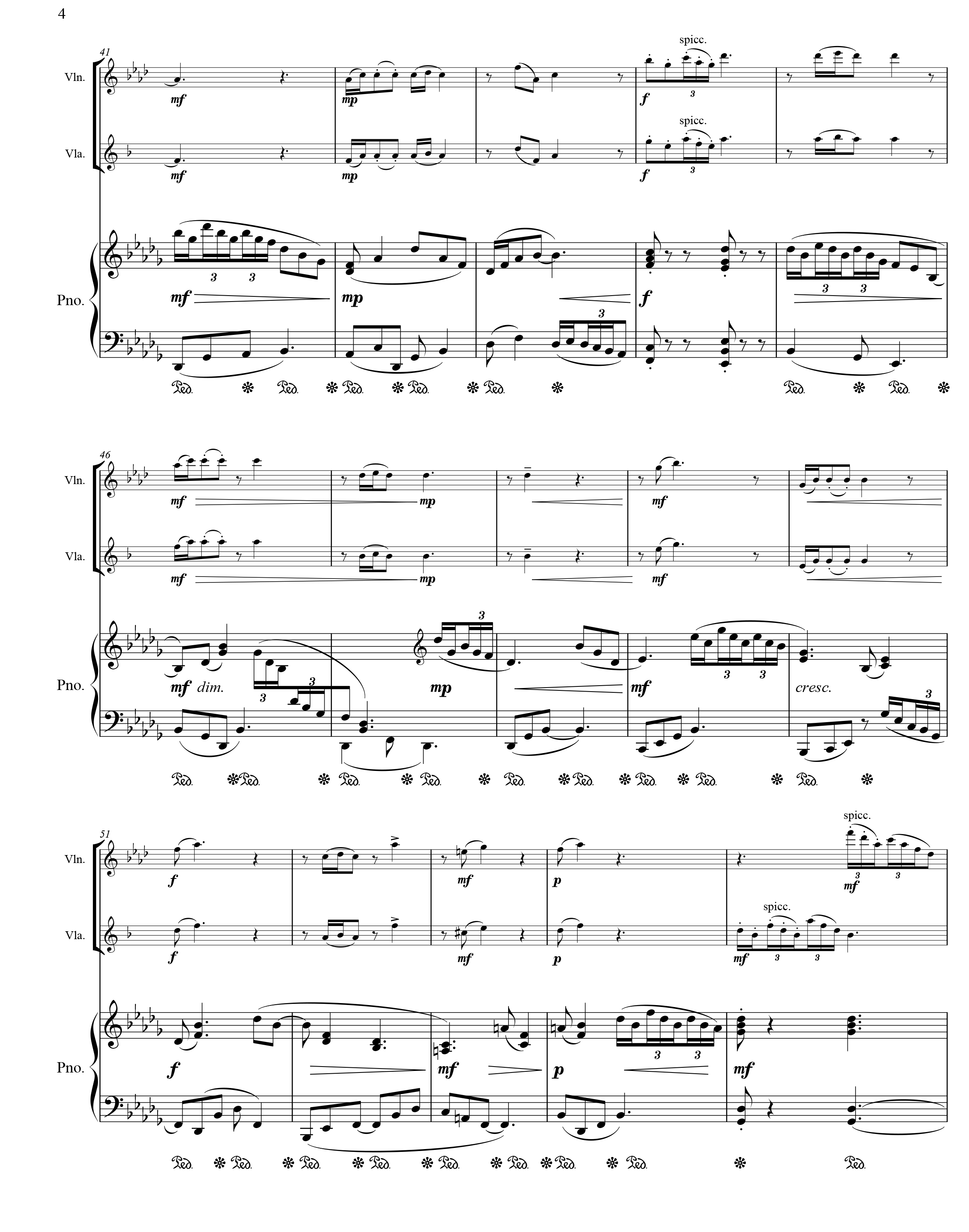
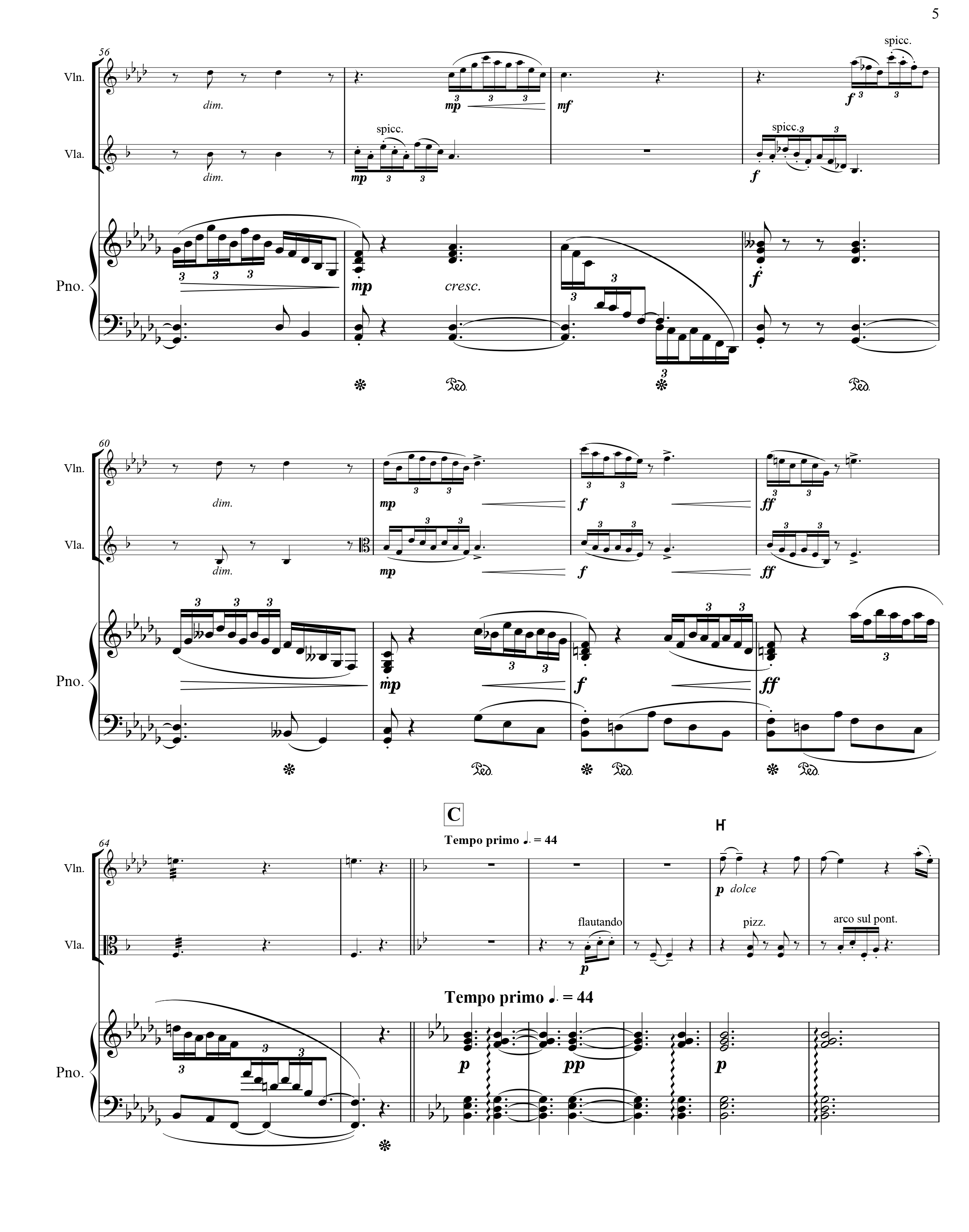
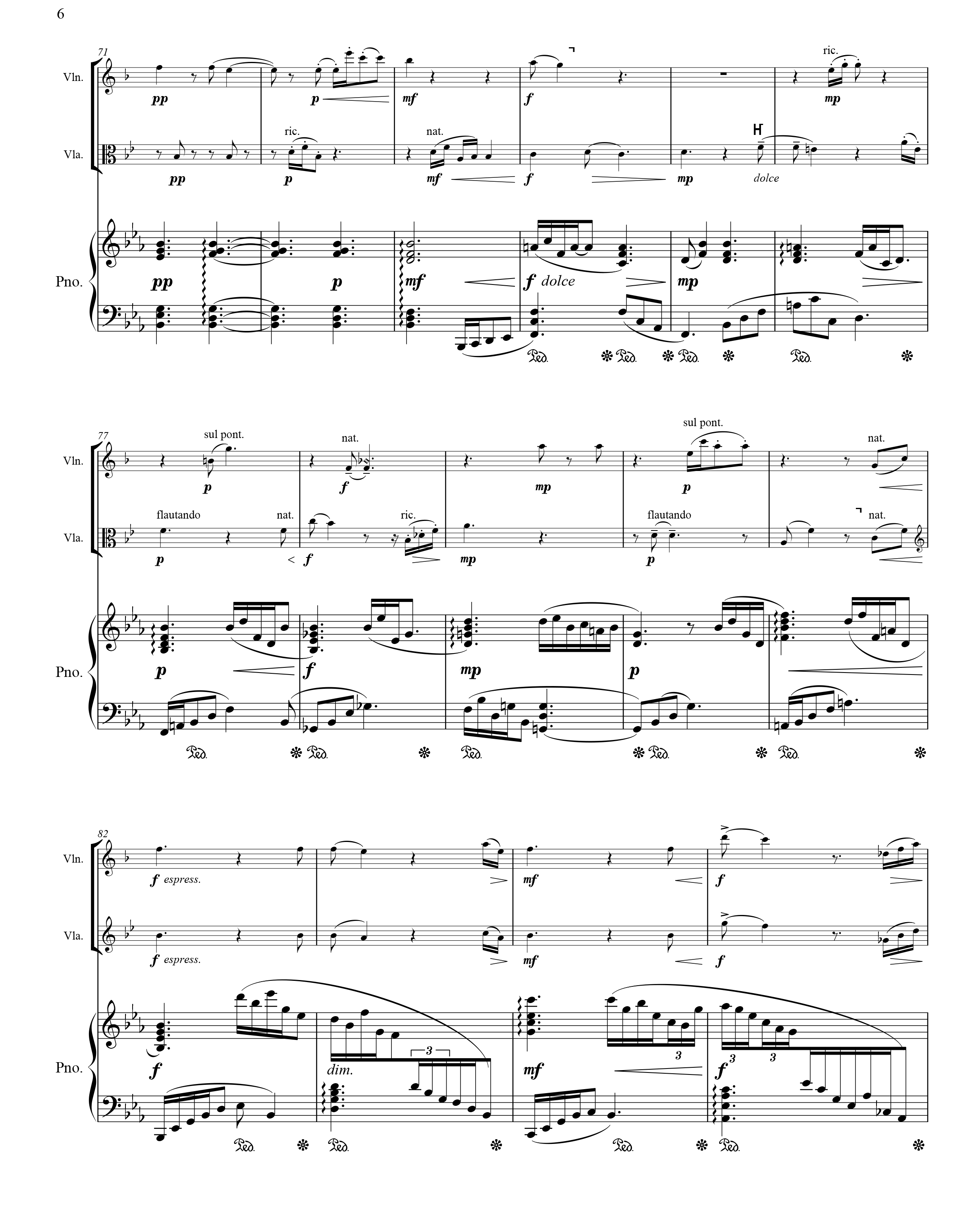
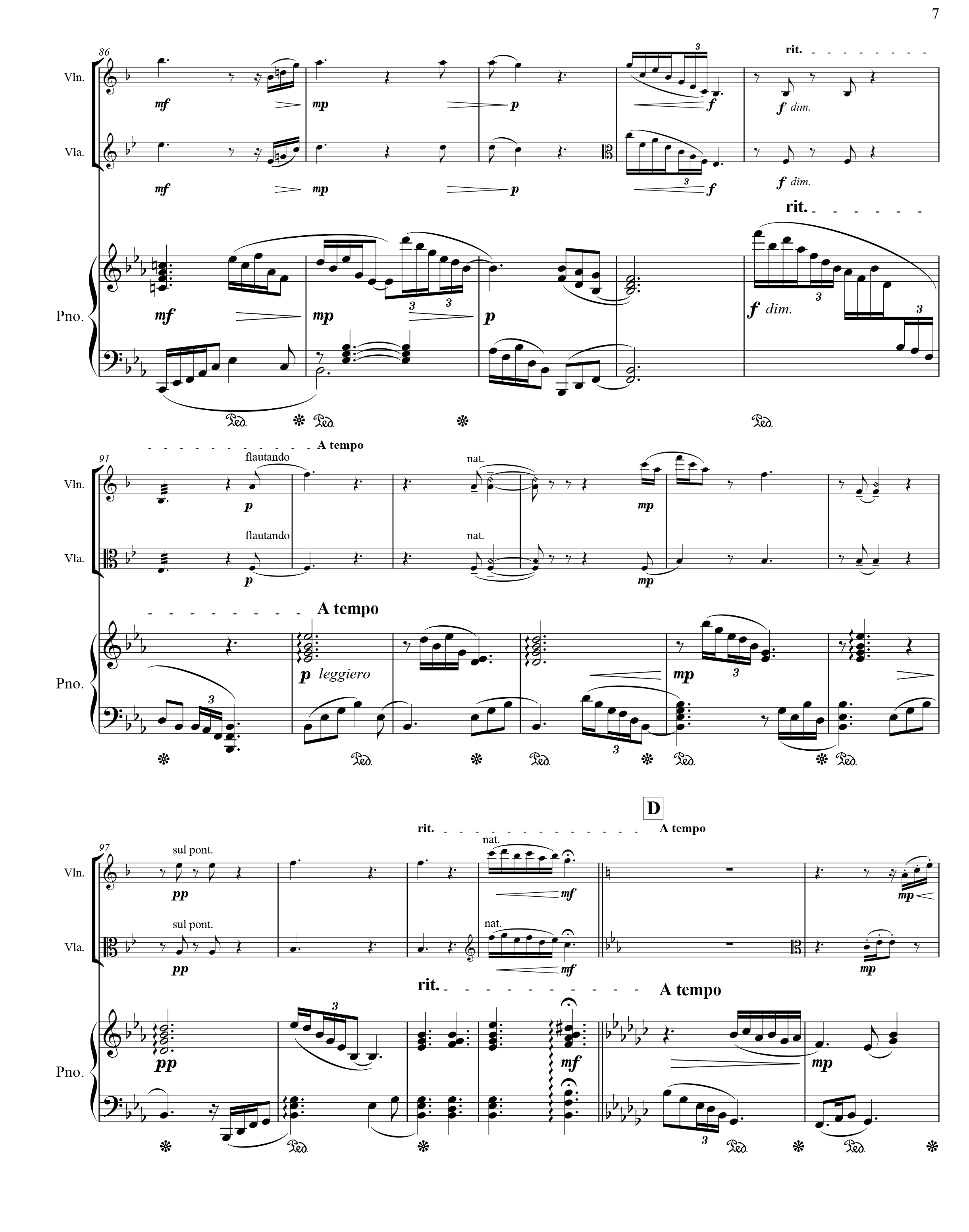
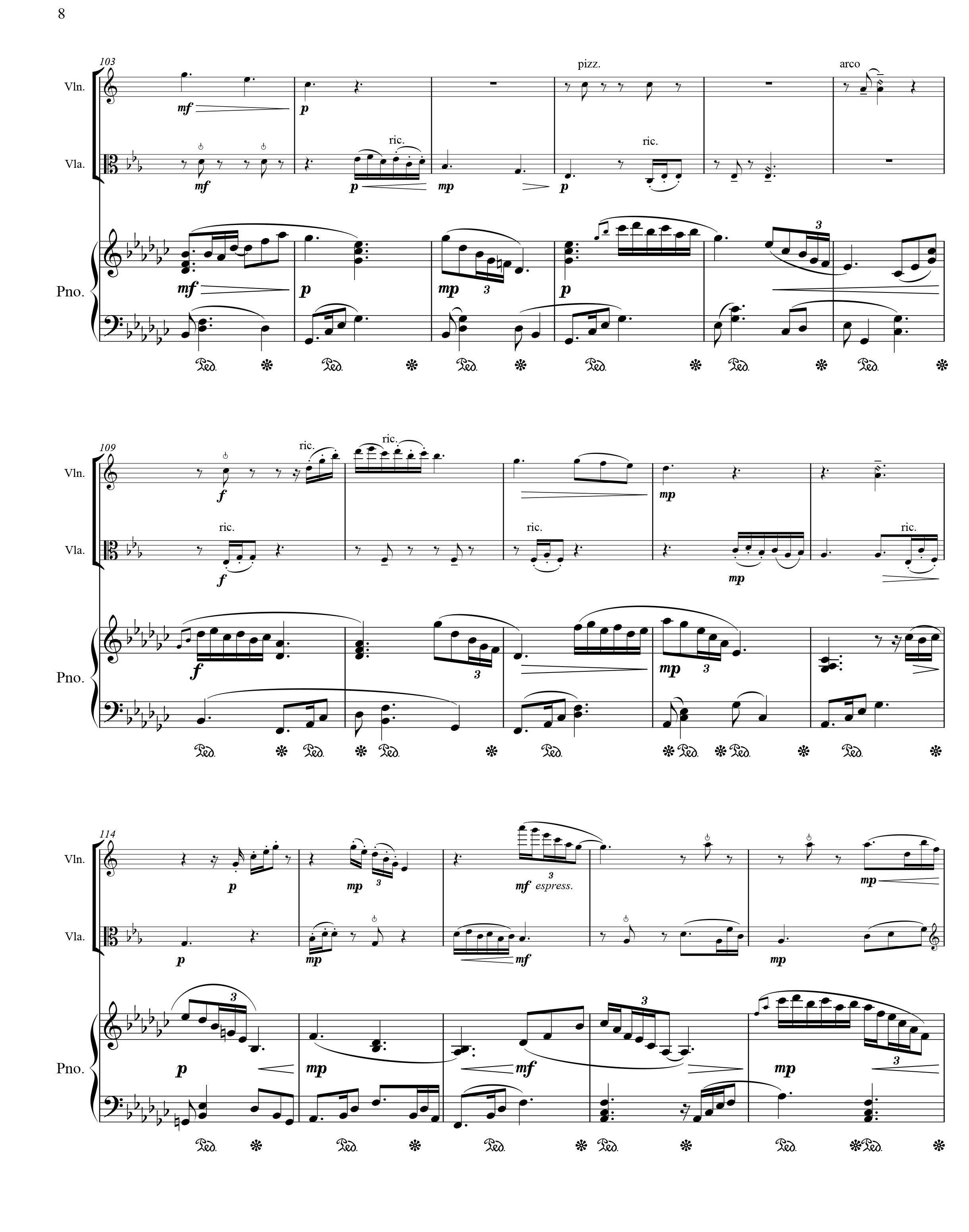
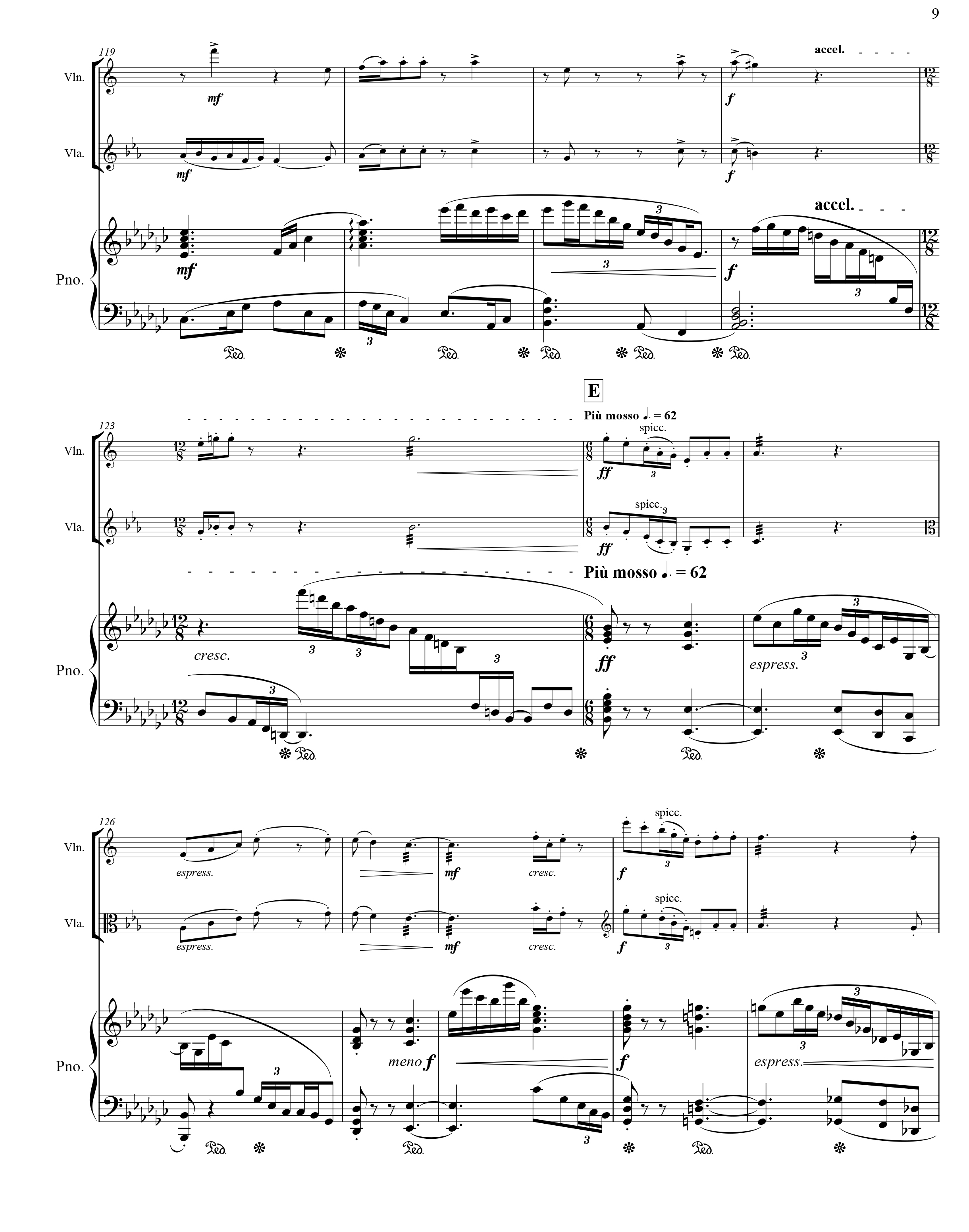
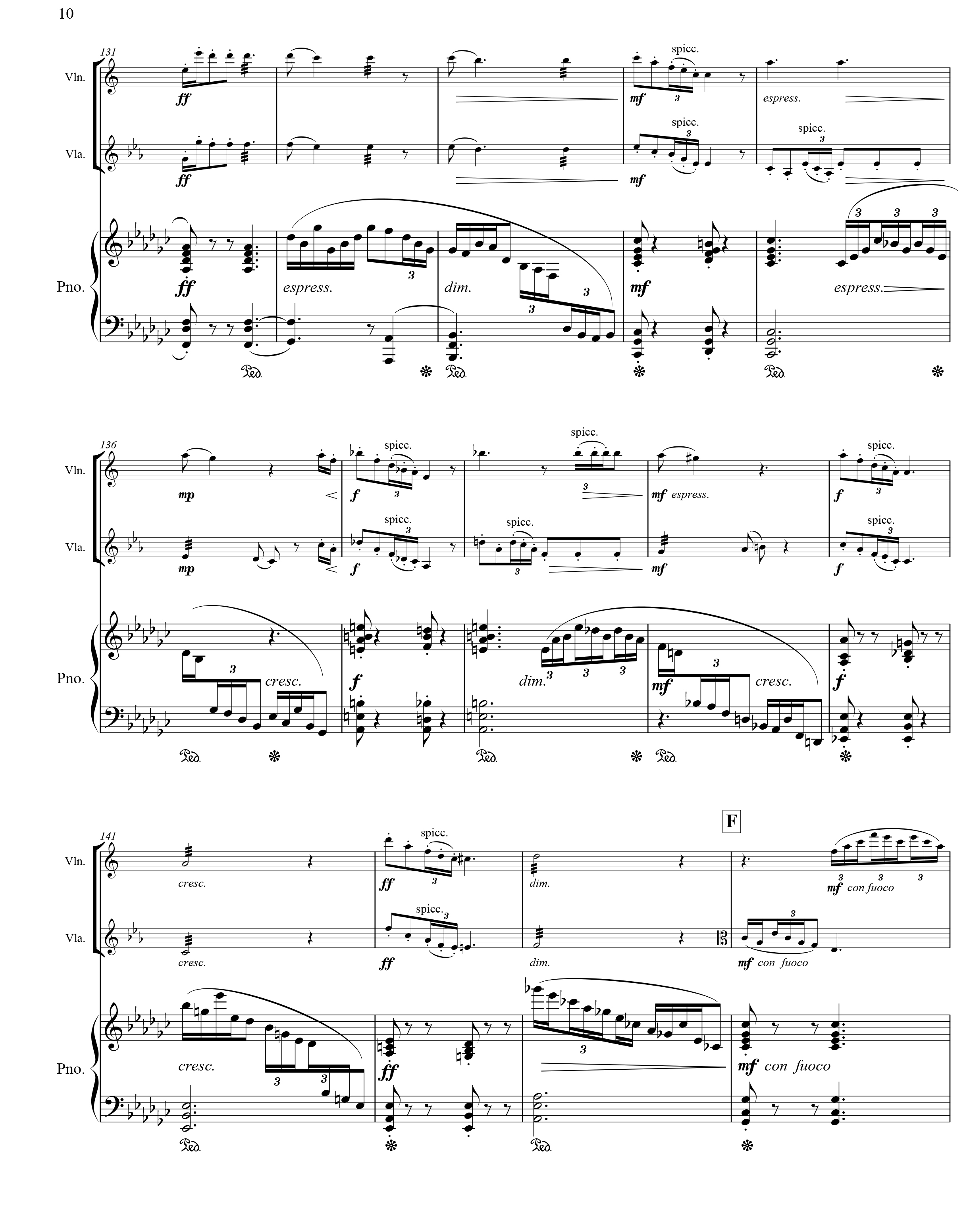
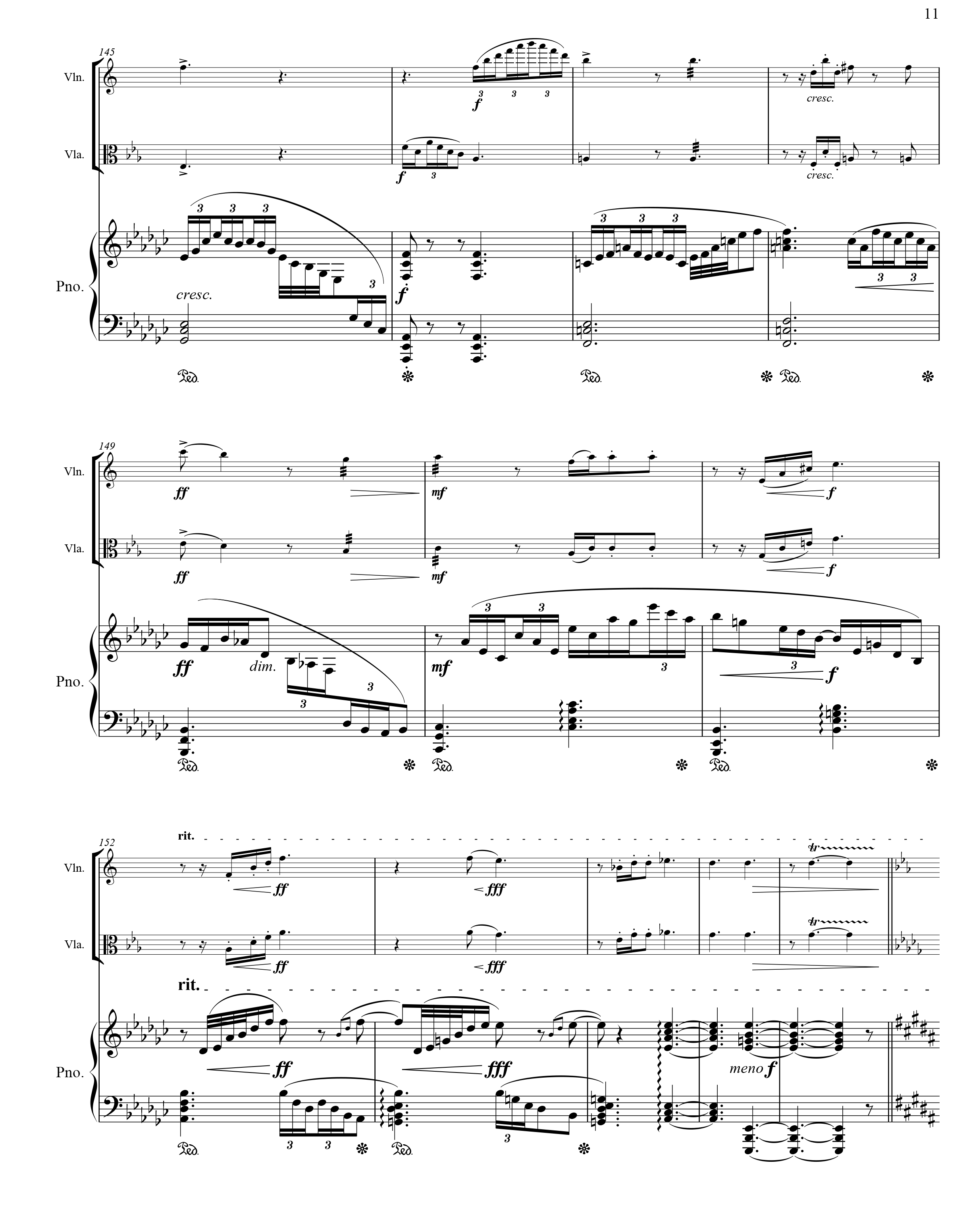
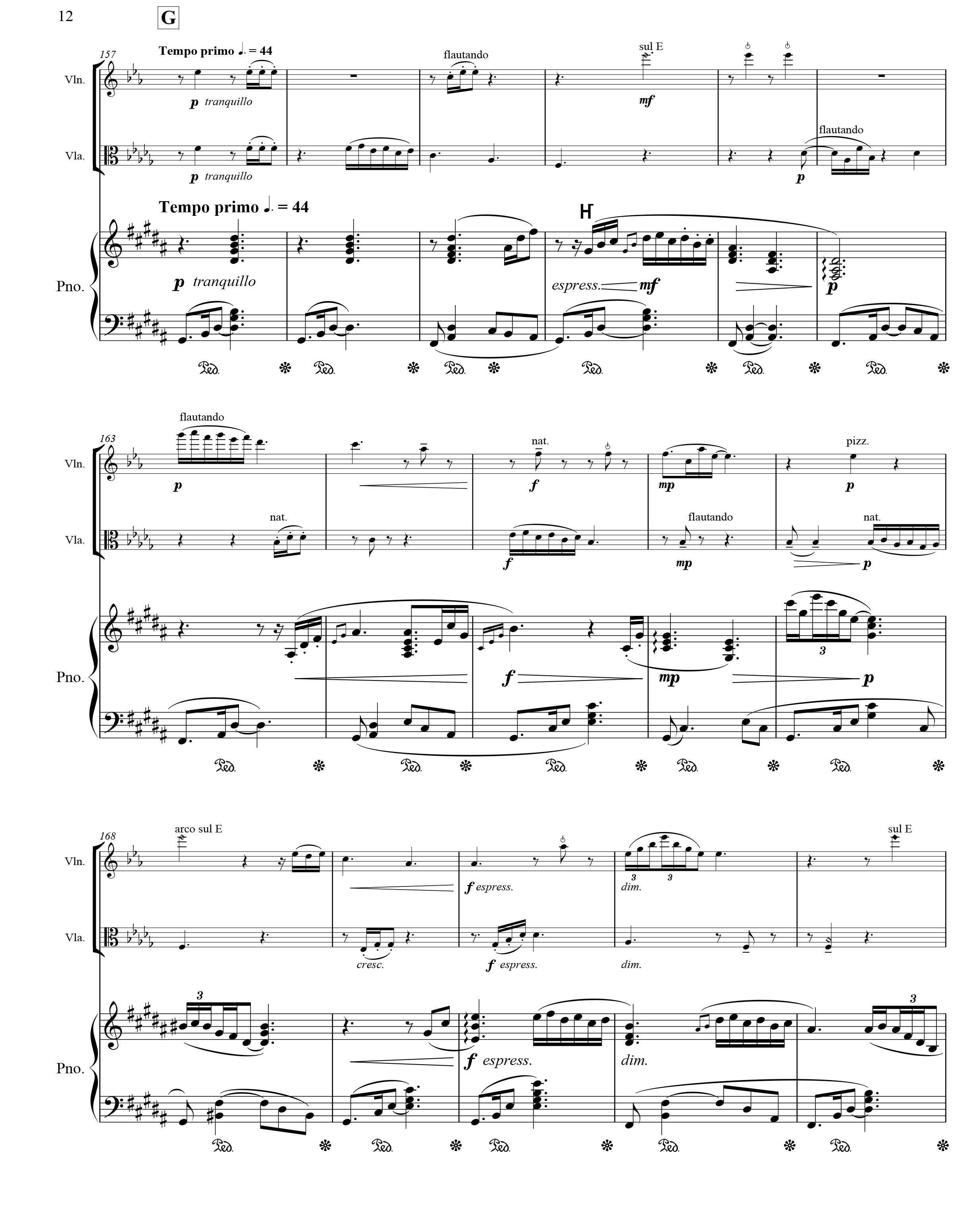
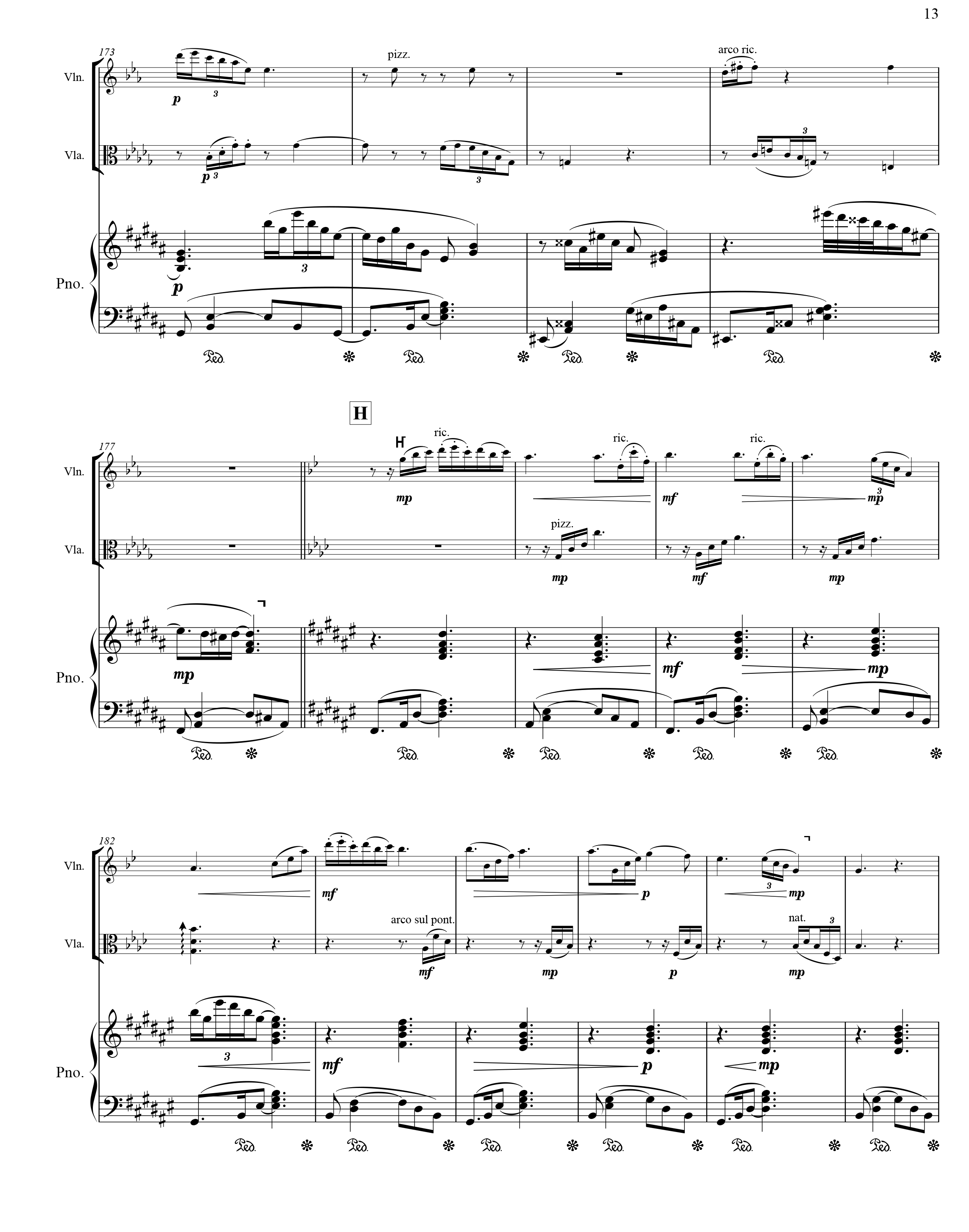
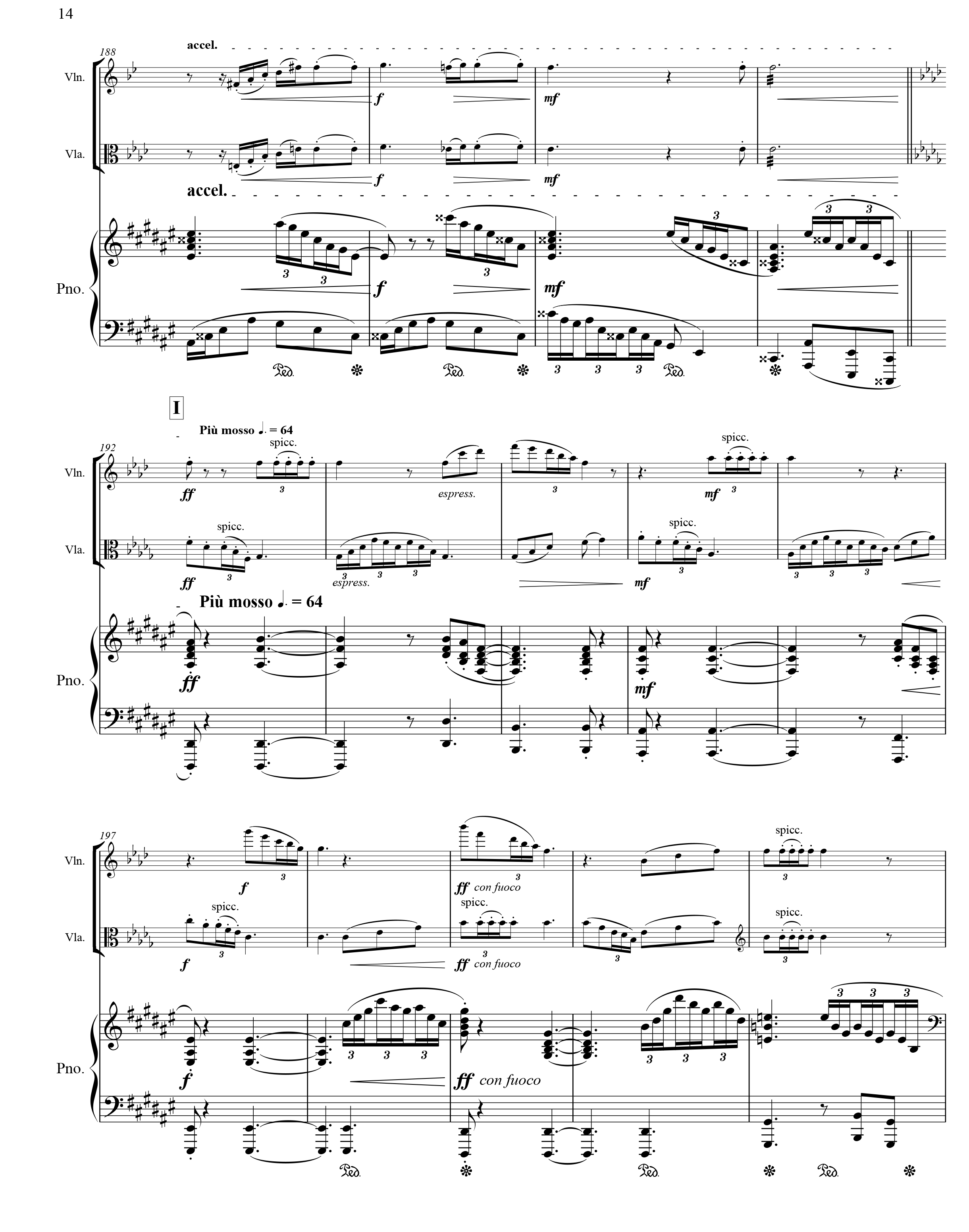
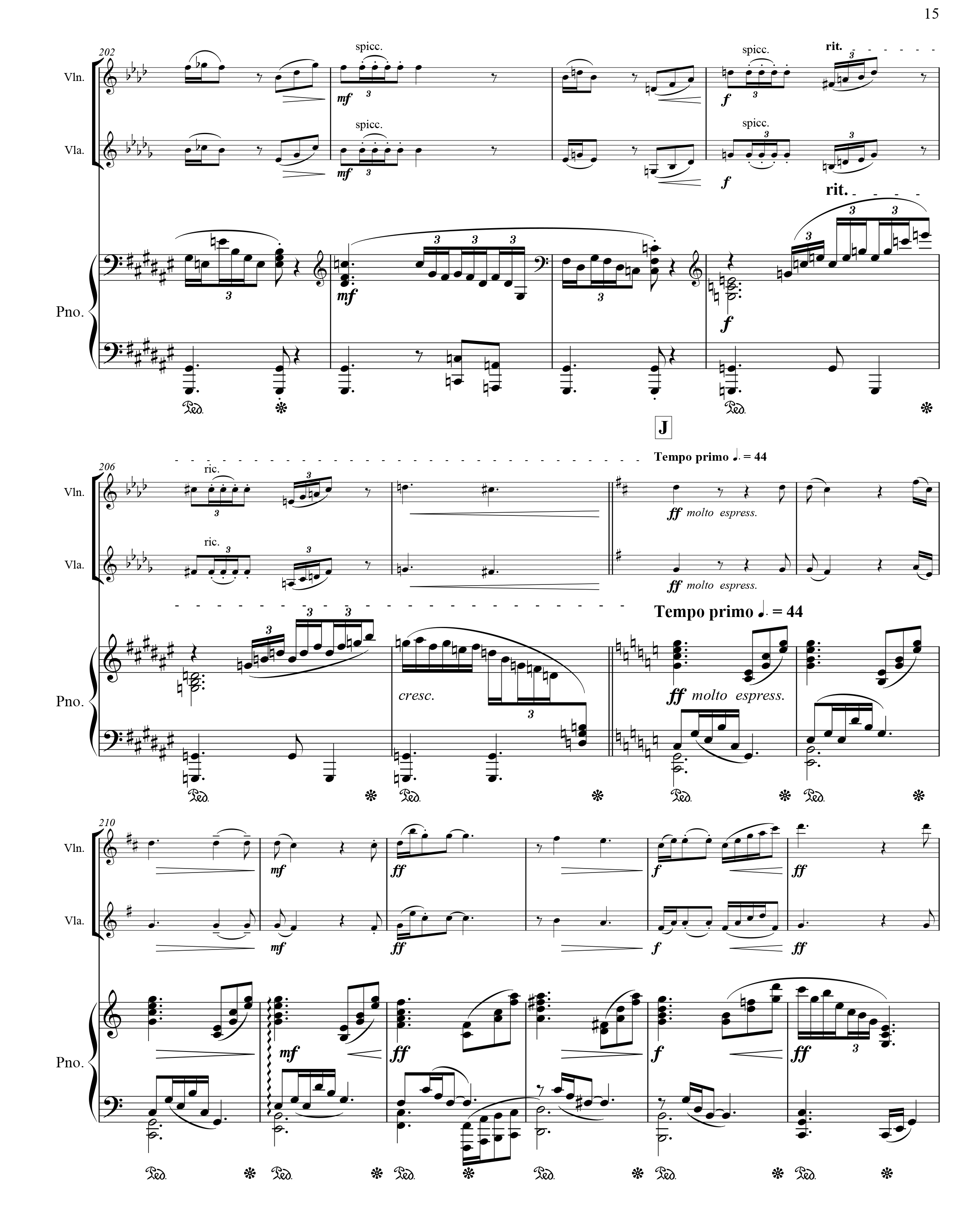
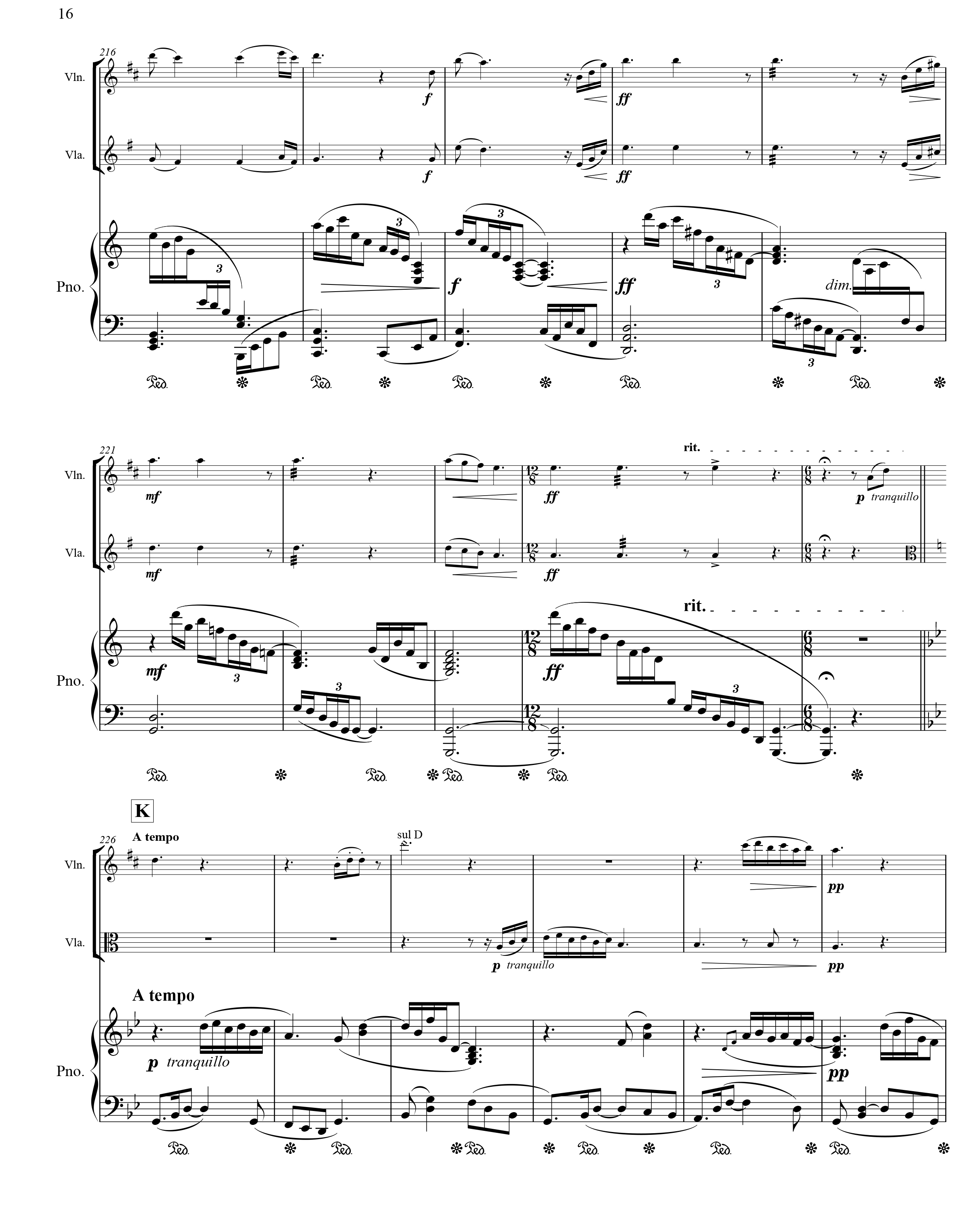
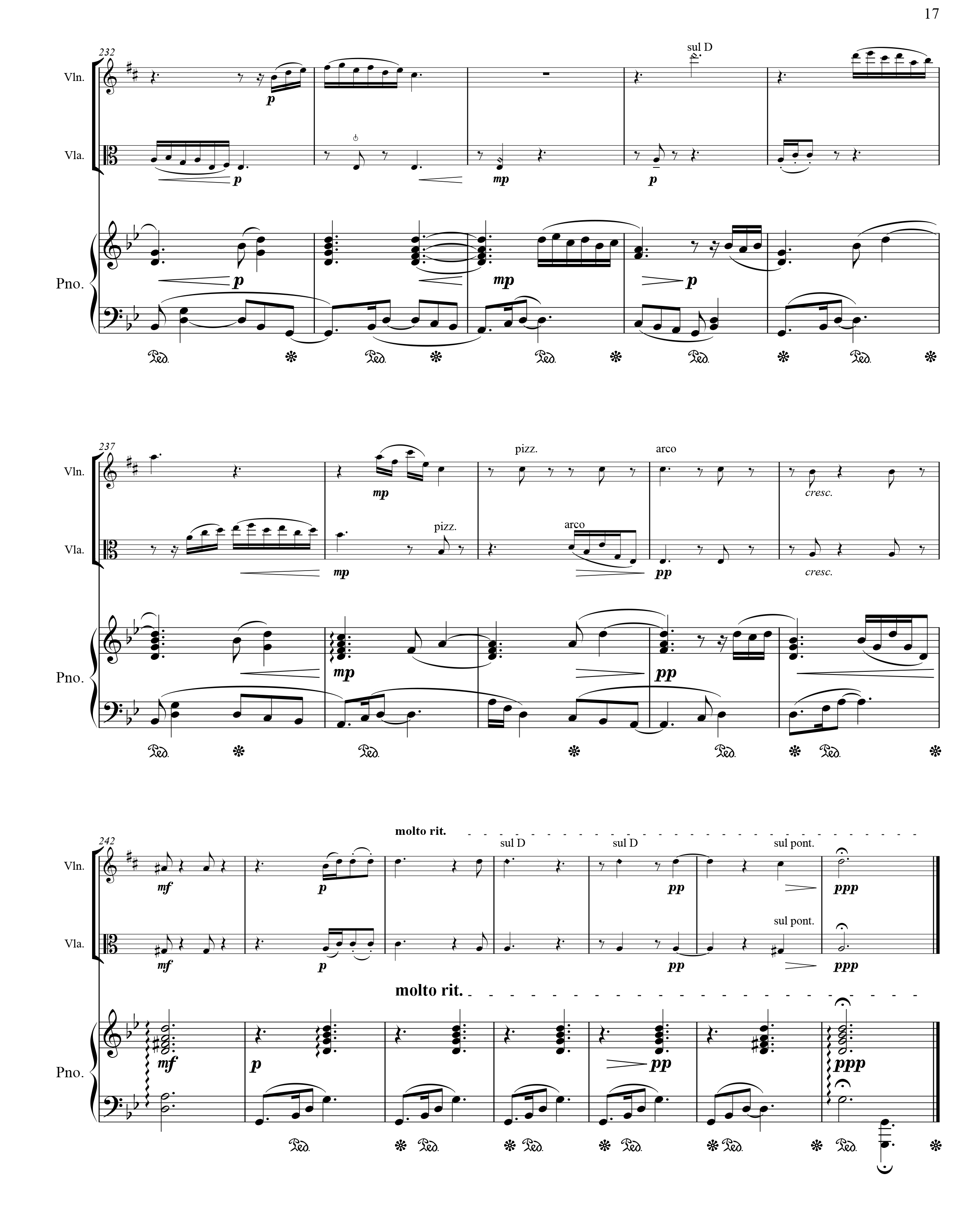
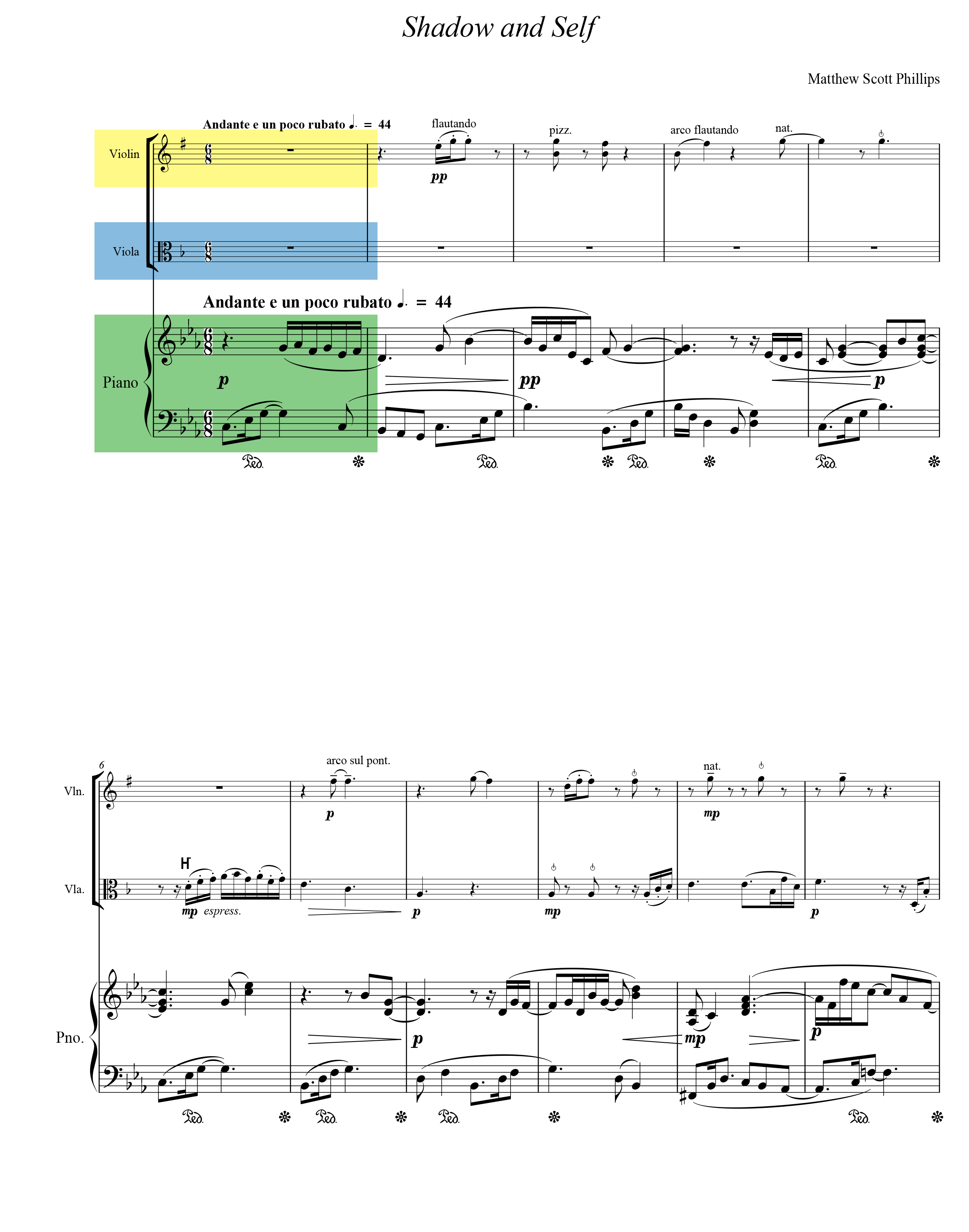
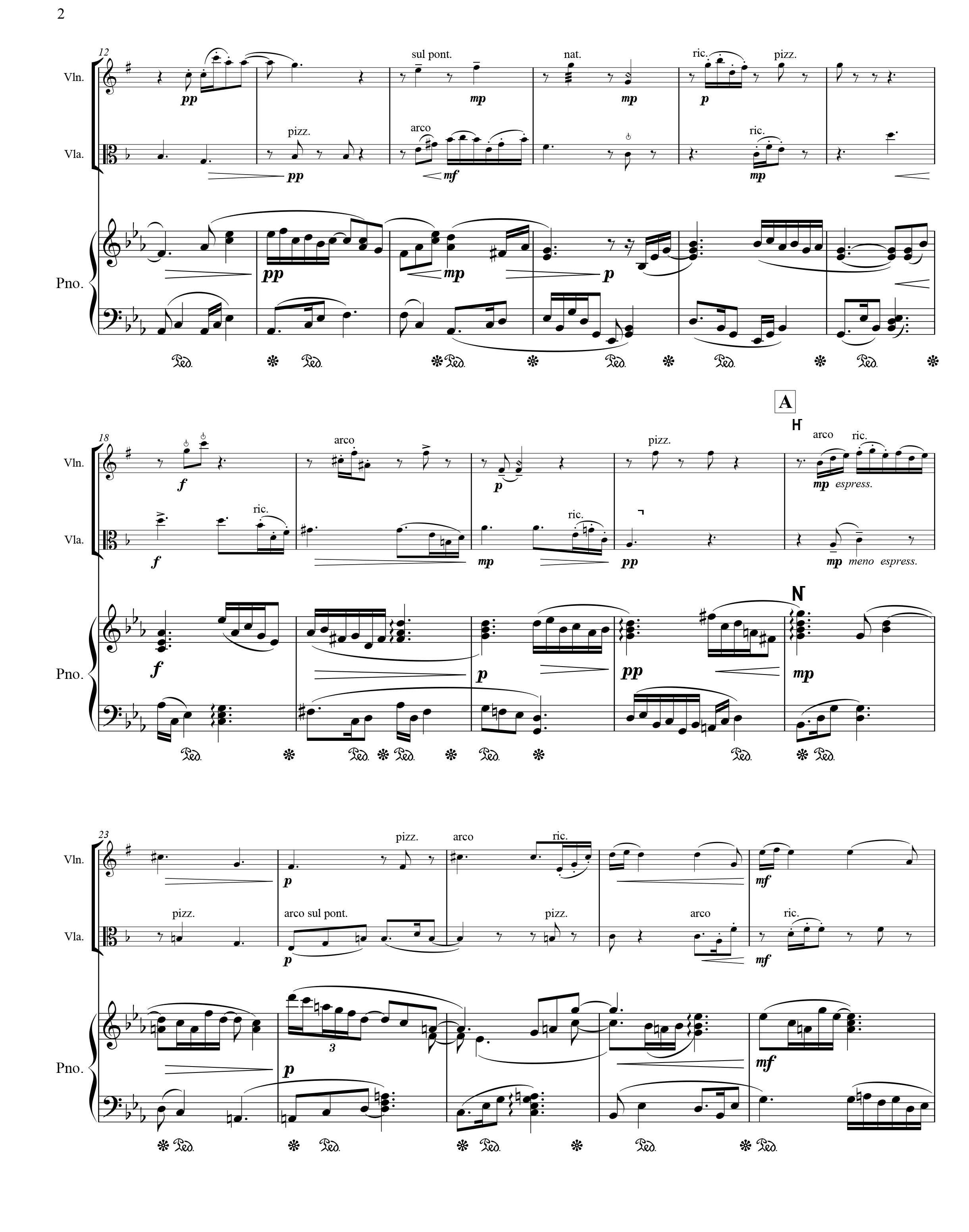
Our own Dr. Phillips composed a polytonal piece called "Shadow and Self". Where Szymanowski used register (high and low pitches) to give each key it's own independence, Matt uses timbre. This trio consists of piano (in C minor), viola (F minor) and violin (G minor). Where the viola and violin lack in timbre differences, they make up for in registeral differences. F minor is a P4 up from C and G minor is a P4 down from C. So all three of these keys share quite a few INVARIANT pitchs. The keys of F minor and G minor are based off of triads from the C minor scale. Notice that the viola and violin are not "stepping on each other". Most of each intruments busier passages happen while the other is more subdued. In this way, rhythm and timing are being used to give each key it's independence by seperating thier parts, giving each room to breathe. Though we only play the first few pages on the show, below is the full score and a link to hear the full piece. See if you can hear each part on its own and the progressions within.


Here is a recording of "Shadow and Self", by Matthew Scott Phillips, performed by Julia Sakharova (violin), Michael Fernadez (viola) and Adam Bowles (piano).